
Introduction
You have a website, you are investing in SEO, publishing content, running social media campaigns, and perhaps even spending money on paid advertising. Yet, the leads are still not coming in. If this sounds familiar, the problem may not be that digital marketing “doesn’t work.” More often, the issue is that one or more parts of the strategy are not aligned with your customers, search intent, website experience, or conversion process.
A business can receive website traffic and still generate very few enquiries. Working with the best seo marketing company is therefore not simply about achieving higher rankings; it is about connecting the right audience with the right message and giving them a clear reason to take action.
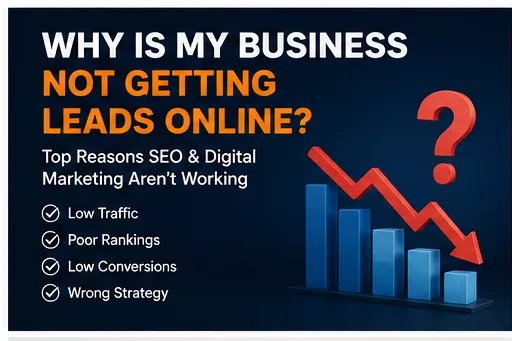
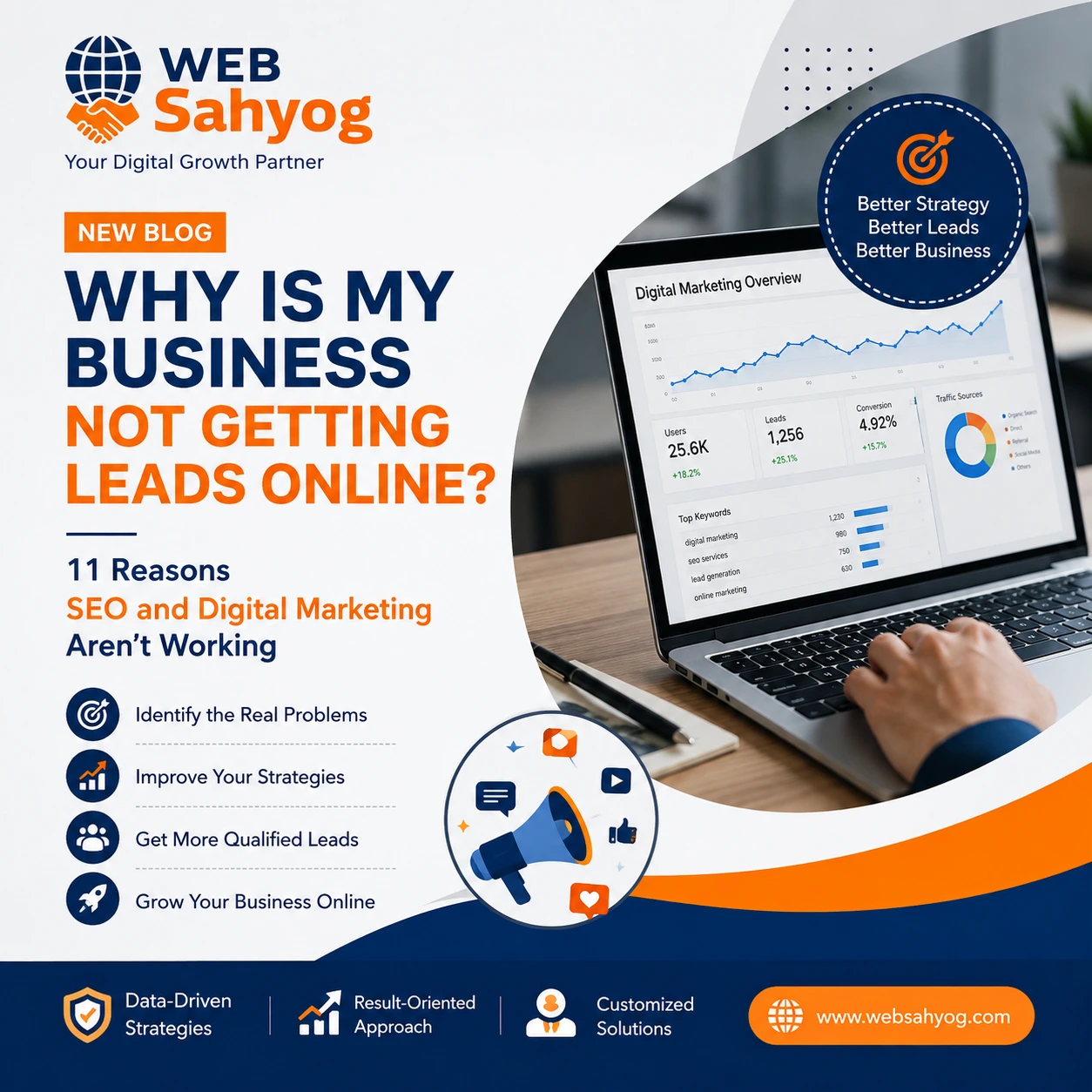
Why Is Your Business Not Getting Leads Online?
Your business may not be generating online leads because you are targeting the wrong keywords, attracting the wrong audience, have a poorly converting website, weak local visibility, inconsistent content, technical SEO problems, insufficient trust signals, or are measuring traffic instead of actual conversions. SEO and digital marketing generate better results when search visibility, content, user experience, conversion optimization, and lead follow-up work together.
11 Reasons SEO and Digital Marketing Aren’t Generating Leads
1. You Are Targeting the Wrong Keywords
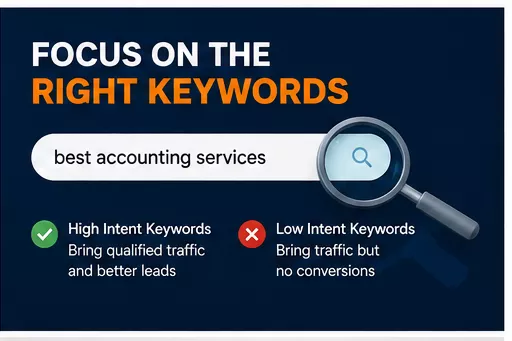
Ranking for keywords does not automatically mean attracting potential customers.
For example, an accounting company may rank for “what is accounting,” but someone searching for “accounting services for small businesses” has a much stronger commercial intent.
Your keyword strategy should include different stages of the customer journey:
- Informational keywords for awareness
- Commercial keywords for research
- Transactional keywords for buying decisions
- Local keywords for location-based searches
Review whether your keywords actually represent the services your customers are looking for.
2. Your Website Gets Traffic but Does Not Convert
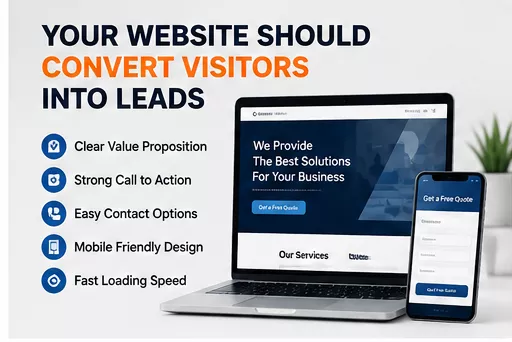
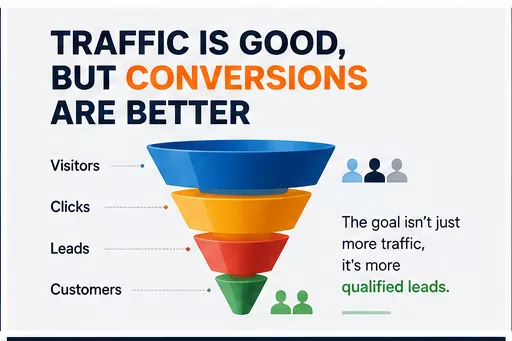
Traffic is only the beginning. If visitors arrive on your website but do not call, submit a form, request a quotation, or contact you on WhatsApp, there is a conversion problem.
Check whether your website has:
- Clear calls to action
- Simple enquiry forms
- Visible contact information
- Service-specific landing pages
- Strong value propositions
- Customer reviews and testimonials
- Mobile-friendly navigation
A visitor should understand within seconds what your business offers and what they should do next.
3. Your SEO Strategy Focuses Only on Rankings
Search rankings are important, but they are not the final business objective.
A page ranking at position three for an irrelevant keyword may generate less revenue than a page ranking at position eight for a highly relevant commercial search.
Instead of asking only, “What position does my website rank at?” ask:
“Is this ranking generating qualified visitors and enquiries?”
Connect SEO reporting with conversions, lead quality, sales opportunities, and revenue wherever possible.
4. Your Website Content Does Not Match User Intent
Imagine a user searching for “ERP software for manufacturers.” They expect information about features, implementation, pricing considerations, and business benefits.
If your page only provides a generic definition of ERP, the visitor may leave.
Good content should match the reason behind the search. Before creating or optimizing a page, ask:
- What question is the user trying to answer?
- What problem are they trying to solve?
- What information do they need before contacting a company?
- What objections might prevent them from taking action?
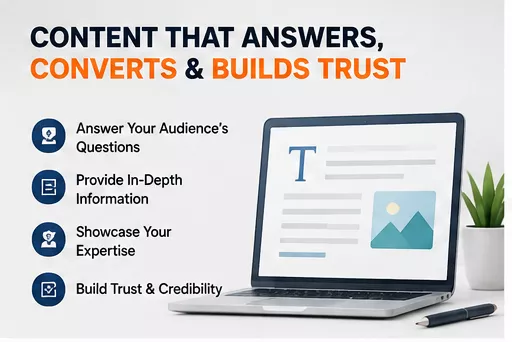
Content that answers these questions is more likely to attract and retain qualified prospects.
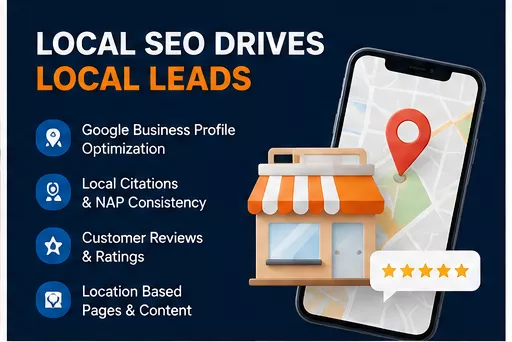
5. Your Local SEO Is Weak or Incomplete
For businesses serving a specific city, region, or service area, organic SEO alone may not be enough.
Effective local seo optimisation services can help businesses improve their visibility for location-based searches.
Important areas include:
- Google Business Profile optimization
- Accurate business information
- Consistent NAP details
- Customer reviews
- Local citations
- Location-specific landing pages
- Local backlinks
- Locally relevant content
- Service-area optimization
For example, a business targeting customers in Jharkhand needs more than simply adding “Jharkhand” repeatedly to its website. It needs a genuine local search strategy based on the services, locations, and customers it serves
6. Your Website Is Slow or Difficult to Use
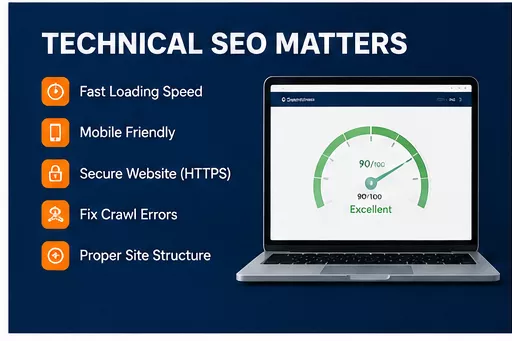
A potential customer can leave before reading your content if your website takes too long to load or is difficult to navigate.
Technical and user-experience issues can include:
- Slow page speed
- Poor mobile experience
- Complicated navigation
- Broken links
- Intrusive pop-ups
- Difficult-to-read text
- Unclear CTAs
SEO and conversion optimization are closely connected because a good search experience should ultimately lead to a good website experience.
7. You Are Not Building Enough Trust
People rarely submit their details to a business they do not trust.
Trust becomes especially important when your product or service is expensive, technical, or involves a long buying cycle.
Strengthen your website with:
- Genuine customer reviews
- Testimonials
- Case studies
- Client logos where permitted
- Author information
- Certifications
- Industry experience
- Clear business contact details
- Transparent service information
Your content should also demonstrate genuine expertise rather than simply repeating information already available on hundreds of other websites.
8. Your Content Strategy Is Inconsistent
Publishing one blog occasionally is unlikely to create a complete organic growth strategy.
Instead, build content around the questions your potential customers ask before, during, and after a purchase.
For example:
Awareness: What is digital transformation?
Consideration: How does digital transformation improve manufacturing?
Decision: How much does digital transformation software cost?
Action: How do I choose the right implementation partner?
This approach creates a connected content ecosystem instead of a collection of unrelated blog posts.
9. Your SEO and Paid Marketing Are Working in Silos
SEO, Google Ads, social media, content marketing, landing pages, email marketing, and remarketing should not operate as completely separate activities.
For example, paid advertising can reveal which messaging and keywords generate enquiries. Those insights can then influence organic content and landing-page optimization.
Similarly, SEO can identify high-intent searches that may be valuable for paid campaigns.
A coordinated digital strategy can help businesses understand the complete customer journey instead of evaluating every marketing channel independently.
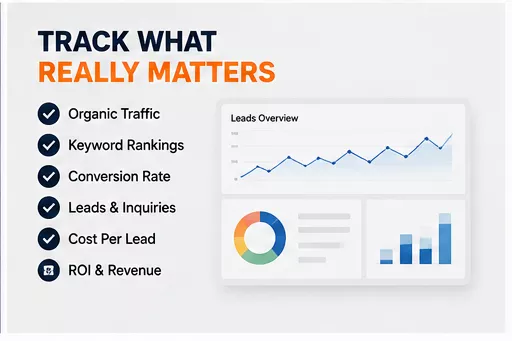
10. You Are Not Tracking the Right Metrics
If your monthly report only says “organic traffic increased by 30%,” you may still not know whether marketing is working.
Track metrics that connect marketing activity to business outcomes, including:
- Organic clicks
- Search impressions
- CTR
- Keyword visibility
- Landing-page traffic
- Conversion rate
- Number of leads
- Qualified leads
- Cost per lead
- Lead-to-customer rate
A website with fewer visitors but highly qualified leads can be more valuable than a website receiving thousands of irrelevant visitors
11. You Expect Results Without Continuous Optimization
SEO is not a one-time activity.
Search behaviour changes. Competitors publish new content. Search engines change how results are displayed. Your website can develop technical problems. Customer expectations can also change.
A successful strategy therefore requires continuous:
- Keyword research
- Content updates
- Technical SEO
- Internal linking
- Conversion optimization
- Local SEO improvements
- Competitor analysis
- Performance measurement
If your strategy has remained unchanged for a long time, it may be time for a complete performance review.
How to Find Out Why Your Business Is Not Getting Leads
Before spending more money on marketing, conduct a basic lead-generation audit.
Check these areas:
- Search intent: Are you targeting keywords your potential customers actually use?
- Rankings: Are your important commercial pages visible in search results?
- CTR: Are users clicking when they see your pages?
- Landing pages: Do your pages clearly communicate the value of your service?
- Conversion paths: Can visitors easily call, message, or submit an enquiry?
- Local visibility: Is your Google Business Profile properly optimized?
- Technical performance: Is your website fast, secure, mobile-friendly, and easy to navigate?
- Content: Does your website answer the questions customers ask?
- Trust: Are reviews, testimonials, case studies, and business information visible?
- Lead quality: Are your marketing channels generating potential customers rather than just traffic?
This audit can reveal whether the main problem is visibility, targeting, conversion, or lead quality.
Should You Change Your SEO Strategy or Digital Marketing Agency?
Not every lead-generation problem means you need a new marketing agency.
First, identify the actual problem. If your website has strong rankings but poor conversion rates, the solution may be landing-page optimization rather than completely changing your SEO provider.
If your rankings are poor because of technical issues, weak content, or incorrect targeting, your strategy needs improvement.
If you are unsure where the problem exists, an independent SEO and digital marketing audit can help identify the gaps before you make a larger investment.
Businesses looking for the best seo marketing company should evaluate providers based on their ability to connect SEO activity with measurable business outcomes—not simply promises of higher rankings.
For businesses operating in Jharkhand, choosing a digital marketing agency in Jamshedpur, Jharkhand can also provide useful local market knowledge, particularly when the strategy requires location-specific SEO, content, reputation management, and lead generation.
Frequently Asked Questions
Website traffic does not guarantee conversions. Your visitors may have low purchase intent, or your website may have weak messaging, unclear CTAs, poor landing pages, or insufficient trust signals. Analyze which pages and keywords generate traffic and compare them with actual enquiries and qualified leads.
There is no universal timeframe. Results depend on competition, website authority, technical condition, content quality, search intent, location, and the industry. SEO should be evaluated through improving visibility, qualified traffic, conversions, and lead quality rather than relying on a guaranteed number of days or months.
Your SEO strategy may focus too heavily on rankings or traffic instead of commercial intent and conversions. Other causes can include poor keyword targeting, weak content, technical problems, low website trust, ineffective landing pages, or a lack of local visibility.
Local SEO helps businesses become more visible when potential customers search for products or services in a specific area. Google Business Profile optimization, reviews, location pages, local citations, relevant content, and consistent business information can improve local search visibility and make it easier for nearby customers to contact the business.
The right choice depends on your goals. If your main issue is organic visibility, SEO expertise may be the priority. If you need a broader strategy covering SEO, paid advertising, social media, content, conversion optimization, and lead generation, a full-service digital marketing partner may be more appropriate.
Conclusion
When a business is not getting leads online, the answer is rarely as simple as “SEO is not working.” The real problem could be incorrect keyword targeting, poor search intent alignment, weak local visibility, a slow website, ineffective content, low trust, poor conversion paths, or inadequate measurement.
The goal should not be to generate traffic for its own sake. The goal is to attract the right audience, answer their questions, build trust, and make it easy for qualified prospects to take action.
A structured audit can help identify where your marketing funnel is breaking down and which improvements should be prioritized. With the right strategy, businesses can turn SEO and digital marketing from a traffic-generating activity into a more measurable lead-generation system.
If your business needs a strategy focused on visibility, qualified traffic, and conversions, evaluating the best seo marketing company should start with its approach to your actual business goals—not just its ranking promises.