
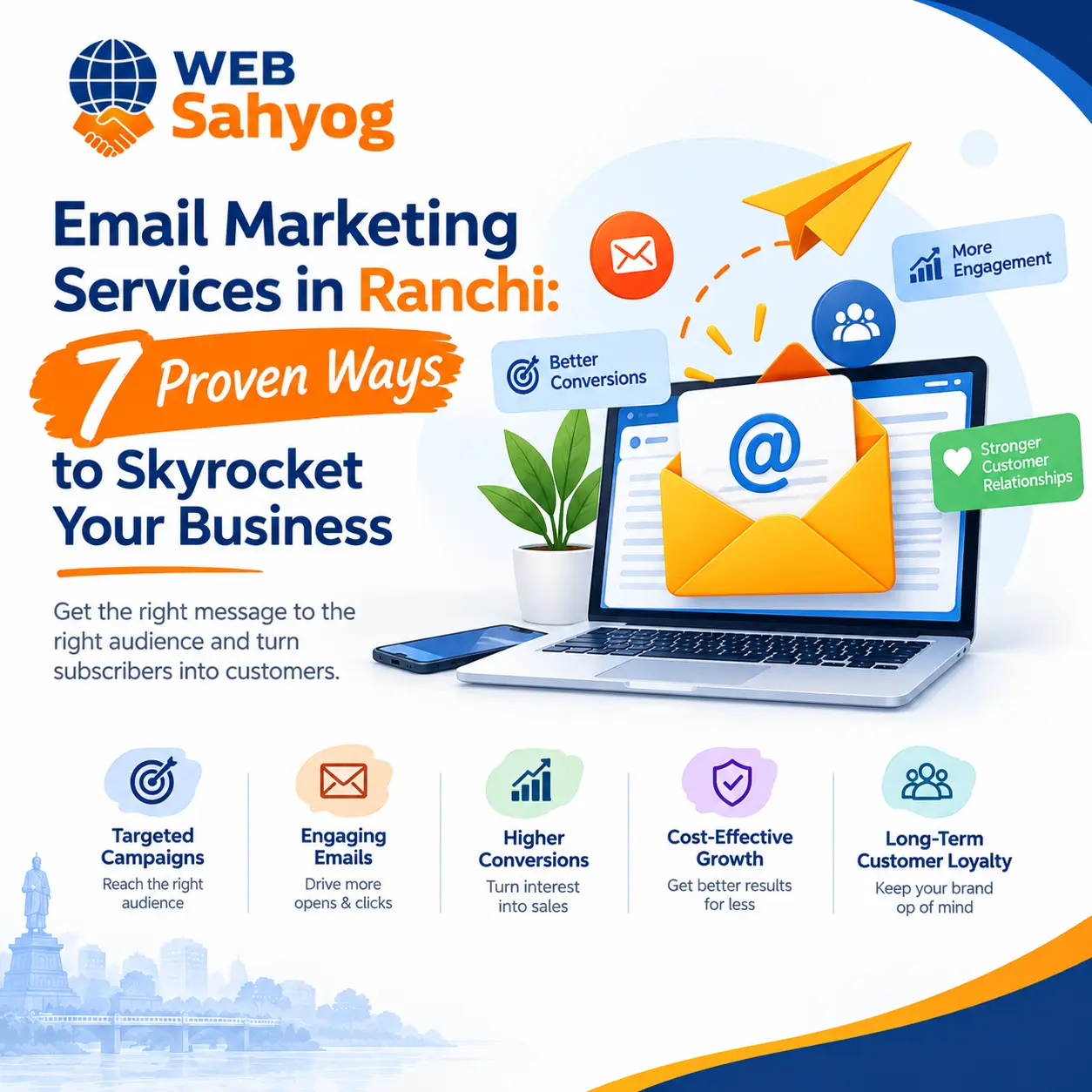
Email Marketing Services in Ranchi: 7 Proven Ways to Skyrocket Your Business
For small business owners in Ranchi comparing email marketing services, the key question is not how many emails you can send, but how many relevant conversations those emails can create. An Email Marketing Agency in Ranchi can help you turn website visitors, enquiries, and existing customers into a more organized sales pipeline. The right approach combines useful content, timely follow-ups, and clear measurement rather than sending the same promotion to everyone.
This guide explains seven practical ways email marketing can support business growth, what to look for when choosing an agency, and how Web Sahyog can fit into that process.
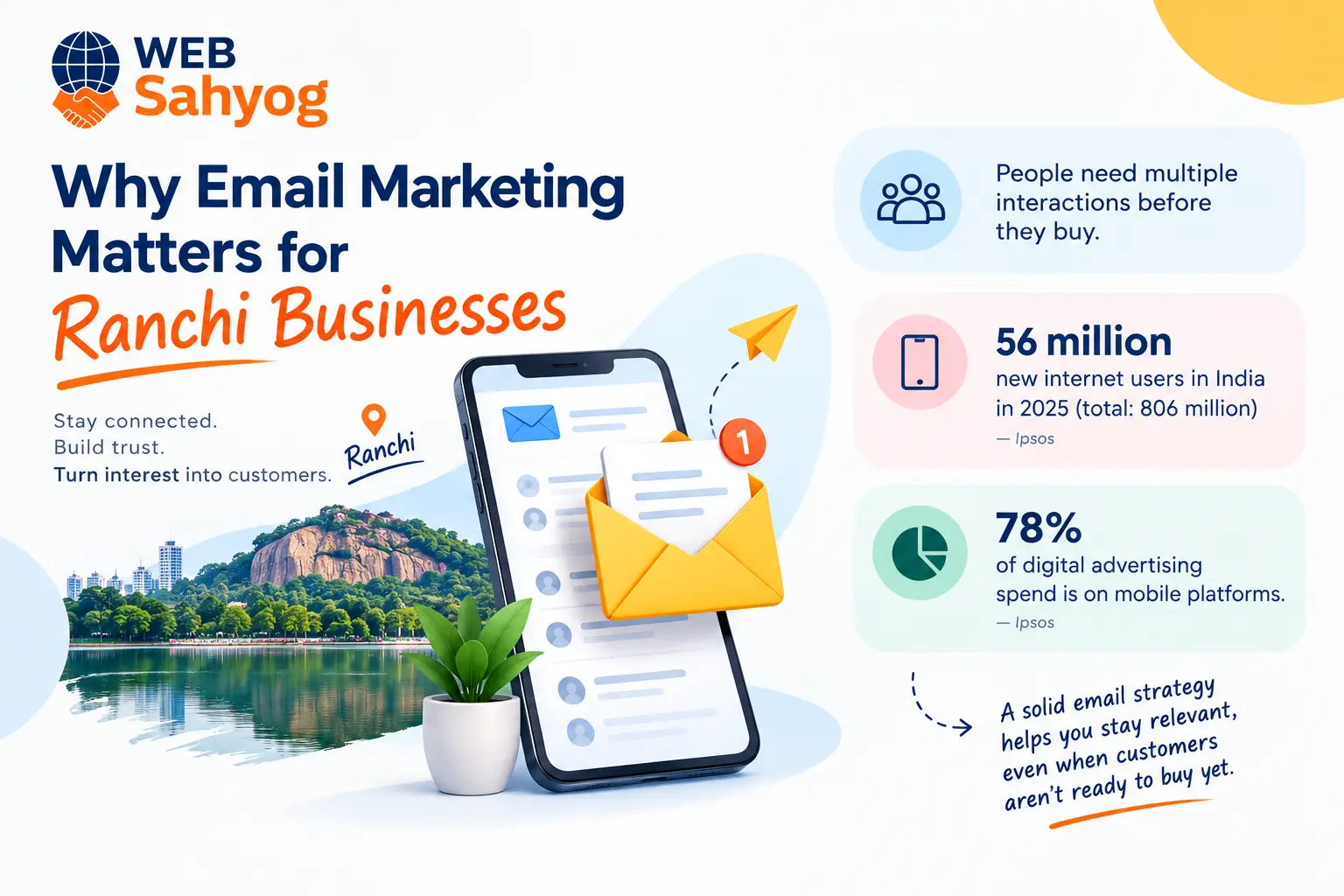
Why Email Marketing Matters for Ranchi Businesses
For a local business, that matters because a customer may need several interactions before deciding to buy. A person researching coaching classes, comparing service providers, or considering a property purchase may not be ready to act on the first visit. A useful follow-up can keep the business relevant without requiring the customer to search again.
India’s digital marketing market is also becoming more competitive. Ipsos reported that India added 56 million internet users in 2025, taking the total to 806 million, while mobile platforms accounted for 78% of digital advertising spend. These figures describe the broader digital market, not email marketing performance specifically, but they show why businesses need a way to maintain customer relationships beyond individual advertisements.
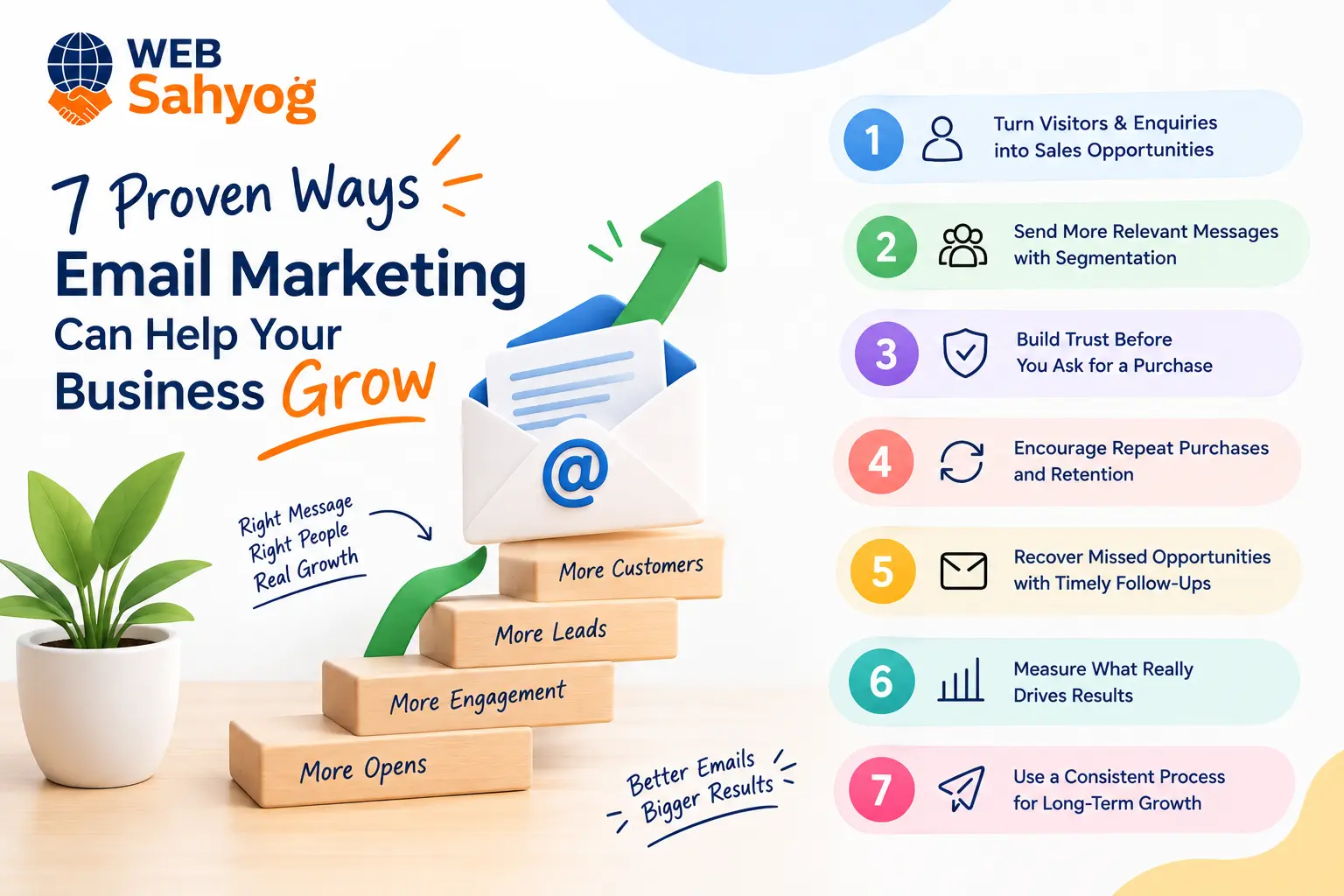
7 Proven Ways Email Marketing Can Help Your Business Grow
1. Turn Website Visitors and Enquiries into Sales Opportunities
A visitor who downloads a brochure, requests a quotation, or submits an enquiry has already shown some interest. Email marketing can help you follow up while that interest is still relevant.
For example, a local service business could send a short welcome email, explain its service, answer a common customer question, and provide a clear next step. Someone who requested a quotation might receive a follow-up explaining the process, while someone who downloaded a guide could receive related information before being invited to speak with the business.
The practical benefit is a more organized follow-up process. Instead of relying entirely on manual reminders, the business can create a sequence that supports different stages of the buying journey.
2. Send More Relevant Messages Through Customer Segmentation
One of the most useful improvements an email marketing agency can make is separating contacts according to their interests or relationship with the business.
A business might maintain different groups for:
- New subscribers who need an introduction
- People who have requested a quotation
- Existing customers who may need another service
- Customers interested in a particular product or category
- Contacts who have stopped engaging with recent emails
This helps prevent a common problem: sending an offer to people who have no reason to act on it. A restaurant, for instance, may communicate differently with a first-time visitor and a regular customer. A training institute may separate people interested in different courses.
Segmentation is not about collecting as much information as possible. It is about using information the customer has provided to make communication more useful.
3. Build Trust Before Asking for a Purchase
Many businesses focus on promotional emails but overlook the value of educational content. A customer who is unfamiliar with a company may need answers before making a decision.
A useful email could explain how a service works, what questions to ask before purchasing, or how to prepare for an appointment. For example, a healthcare-related business could share general service information and appointment guidance, while a professional service provider could explain the steps involved in getting a quotation.
This approach helps the business demonstrate knowledge without making every message a sales pitch. The goal is to give subscribers a reason to open the next email because the content is useful to them.
4. Encourage Repeat Purchases and Customer Retention
Email marketing is not only for finding new customers. It can also help businesses stay connected with people who have already purchased.
A suitable campaign might include a post-purchase thank-you message, product-care information, a reminder about a service that needs renewal, or a relevant offer for an existing customer. The timing should depend on the business and the customer’s actual needs.
For example, a service business could send a reminder when a customer may need another appointment. A retailer could share related products with customers who have previously purchased from a particular category.
The important distinction is between useful follow-up and unnecessary repetition. A customer should receive a message because it has a clear reason to be relevant, not simply because the business has an email address.
5. Recover Missed Opportunities with Timely Follow-Ups
Some customers show interest but do not complete the next step. They may abandon an enquiry, leave a product in a cart, or stop responding after requesting information.
Where the business has the appropriate permission and the necessary systems, email automation can help address these situations. A follow-up might answer a common concern, provide additional information, or invite the customer to continue the conversation.
For example, an online store could send a reminder about an abandoned cart. A service provider could follow up with someone who requested a quotation but has not yet responded.
The value comes from timing and relevance. A well-designed follow-up can make it easier for a customer to return to a decision they were already considering.
6. Measure What Actually Contributes to Business Results
A professional email campaign should be measured against a business objective, not just the number of emails sent.
Useful metrics include:
| Metric | What it helps you understand |
|---|---|
| Delivery rate | Whether emails are reaching intended recipients |
| Open rate | How often recipients open the message; useful but not a complete measure of success |
| Click-through rate | Whether recipients are engaging with links or calls to action |
| Conversion rate | How many recipients complete the desired action |
| Unsubscribe rate | Whether the content, frequency, or audience needs attention |
| Revenue or qualified leads | Whether the campaign is contributing to the business goal |
For example, a campaign designed to generate enquiries should not be judged only by opens. The more useful question is whether the emails encouraged relevant people to submit an enquiry or contact the business.
An agency should also explain how it will distinguish email-generated results from enquiries that came through other channels. That makes reporting more meaningful and helps the business decide what to improve.
7. Use a Consistent Process Instead of Sending Emails Randomly
Many small businesses struggle with consistency. They may send an email when they have a promotion, then stop communicating for several weeks. This makes it difficult to build a reliable relationship with subscribers.
A practical email marketing process usually includes:
- Defining the business goal
- Identifying the audience
- Creating a useful message
- Choosing an appropriate sending schedule
- Testing the email before sending
- Monitoring engagement and conversions
- Improving future campaigns based on the results
For a local business, the schedule should reflect its customers and capacity. A service provider may need fewer, more targeted emails than a retailer with frequent offers. The aim is not to send more messages, but to send the right messages consistently.
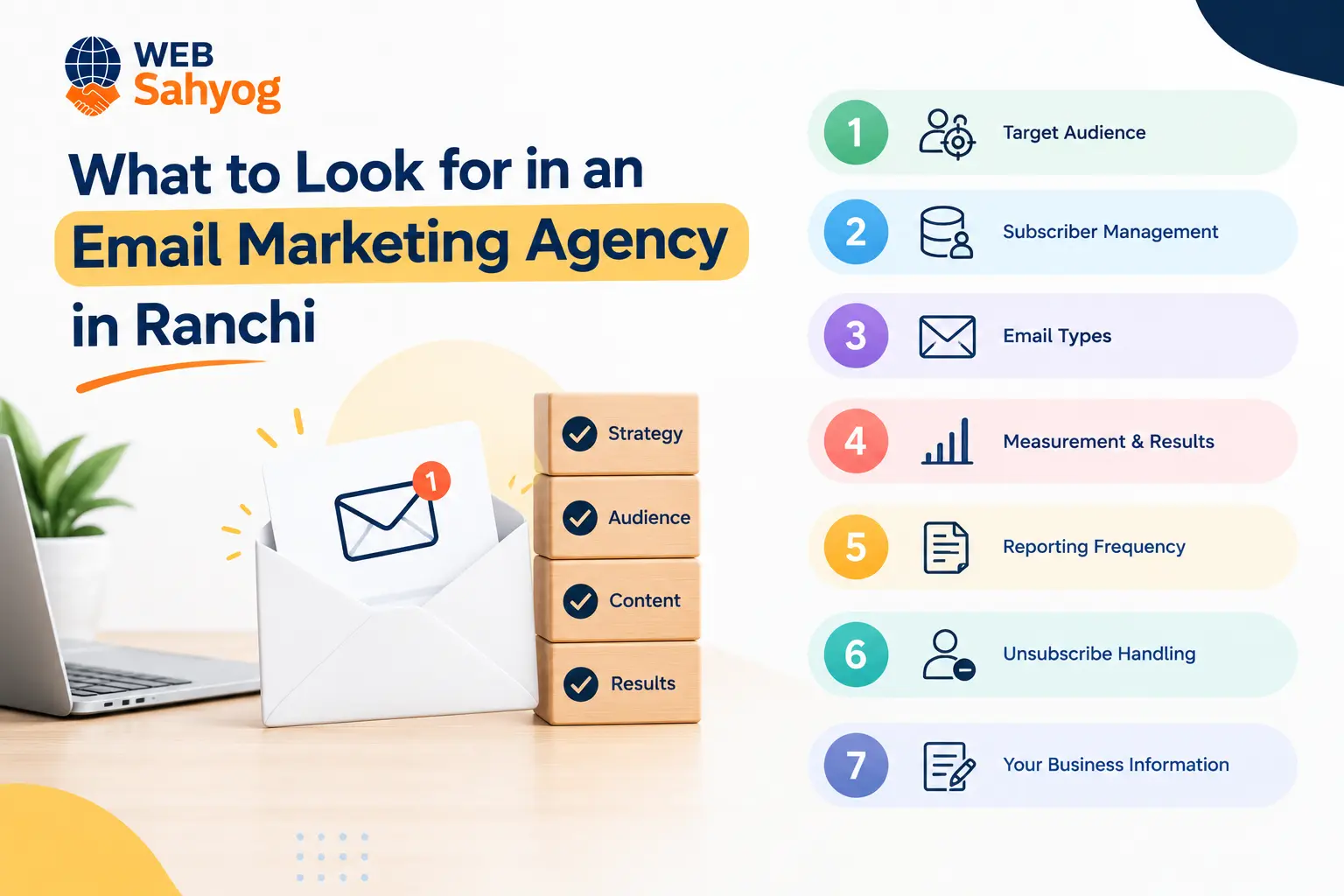
What to Look for in an Email Marketing Agency in Ranchi
Choosing an agency should be based on how well it understands your business problem and how clearly it explains its process.
Before hiring an Email Marketing Agency in Ranchi, ask:
- How will you identify the audience for my campaigns?
- How will you collect and organize subscribers?
- What types of emails will you create for my business?
- How will you measure enquiries, sales, or other business outcomes?
- How often will I receive reports?
- How will you handle unsubscribes and customer preferences?
- What information will you need from my business to create relevant content?
A good agency should be able to explain what it will do, why it matters, and how success will be evaluated. Be cautious of promises based only on large subscriber numbers or guaranteed results without a clear explanation of the work involved.
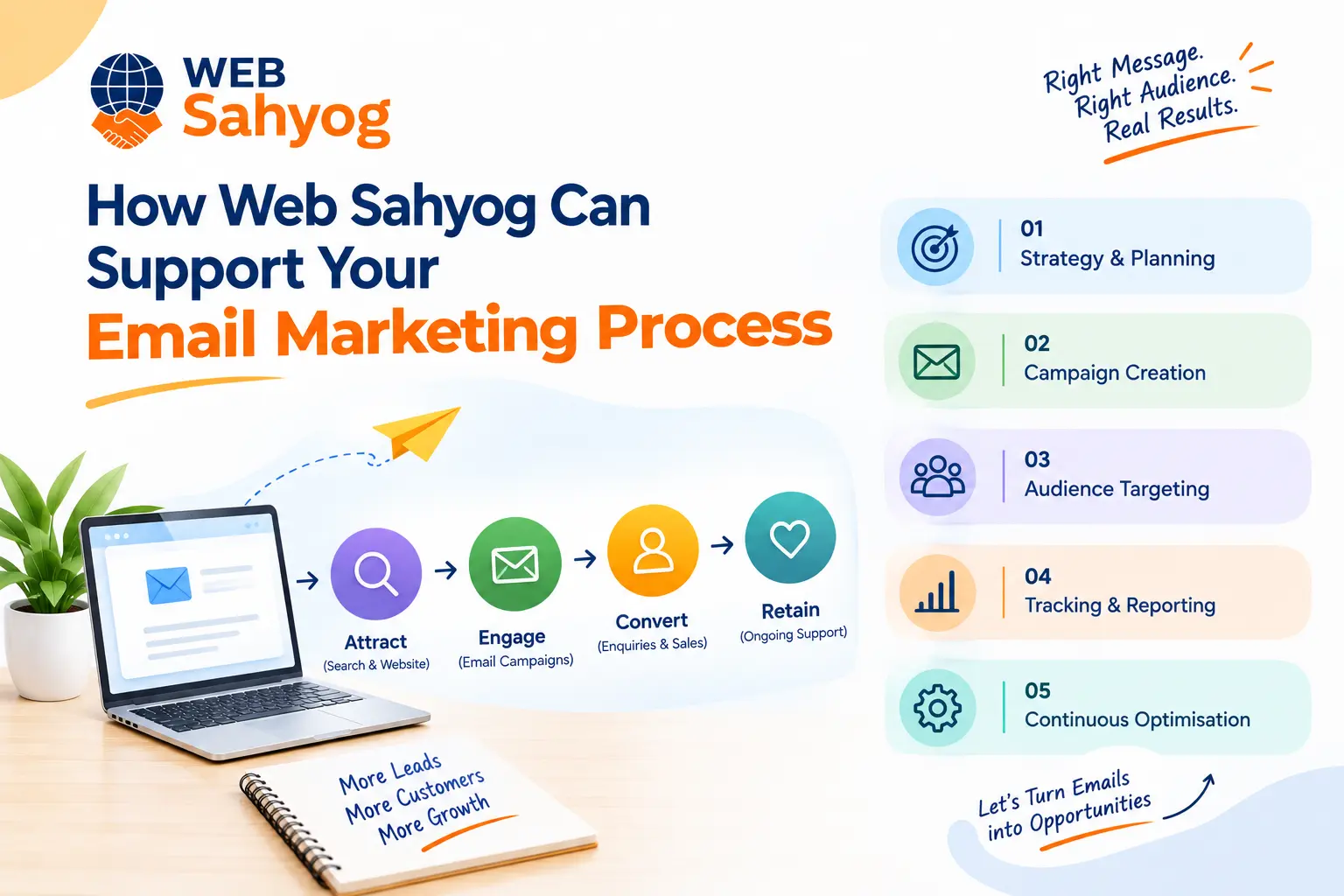
How Web Sahyog Can Support Your Email Marketing Process
Web Sahyog can help businesses approach email marketing as part of a broader lead generation and digital marketing process. The focus should be on connecting the right message with the right audience and supporting the customer journey from initial interest to a meaningful business action.
For example, email campaigns can complement website content, search marketing, and other lead generation activities. A visitor who discovers a business through search may later receive useful information after submitting an enquiry. An existing customer may receive relevant follow-up communication that supports retention.
The most useful starting point is a clear business objective. If the goal is more enquiries, the campaign should be designed around that outcome. If the goal is repeat purchases, the content and timing should reflect the existing customer relationship.
Email Marketing in India: Privacy and Consent Matter
Email marketing should be built around permission, transparency, and responsible use of customer data. India’s Digital Personal Data Protection Act, 2023 sets out requirements concerning consent, including that consent should be free, specific, informed, and unambiguous, with a clear affirmative action. It also provides for withdrawal of consent.
The government notified the DPDP Rules, 2025 on 14 November 2025. The rules include requirements for clear notices and information about how individuals can withdraw consent. Businesses should therefore review their data collection and email practices with appropriate legal or compliance guidance rather than assuming that every existing contact can automatically receive promotional messages.
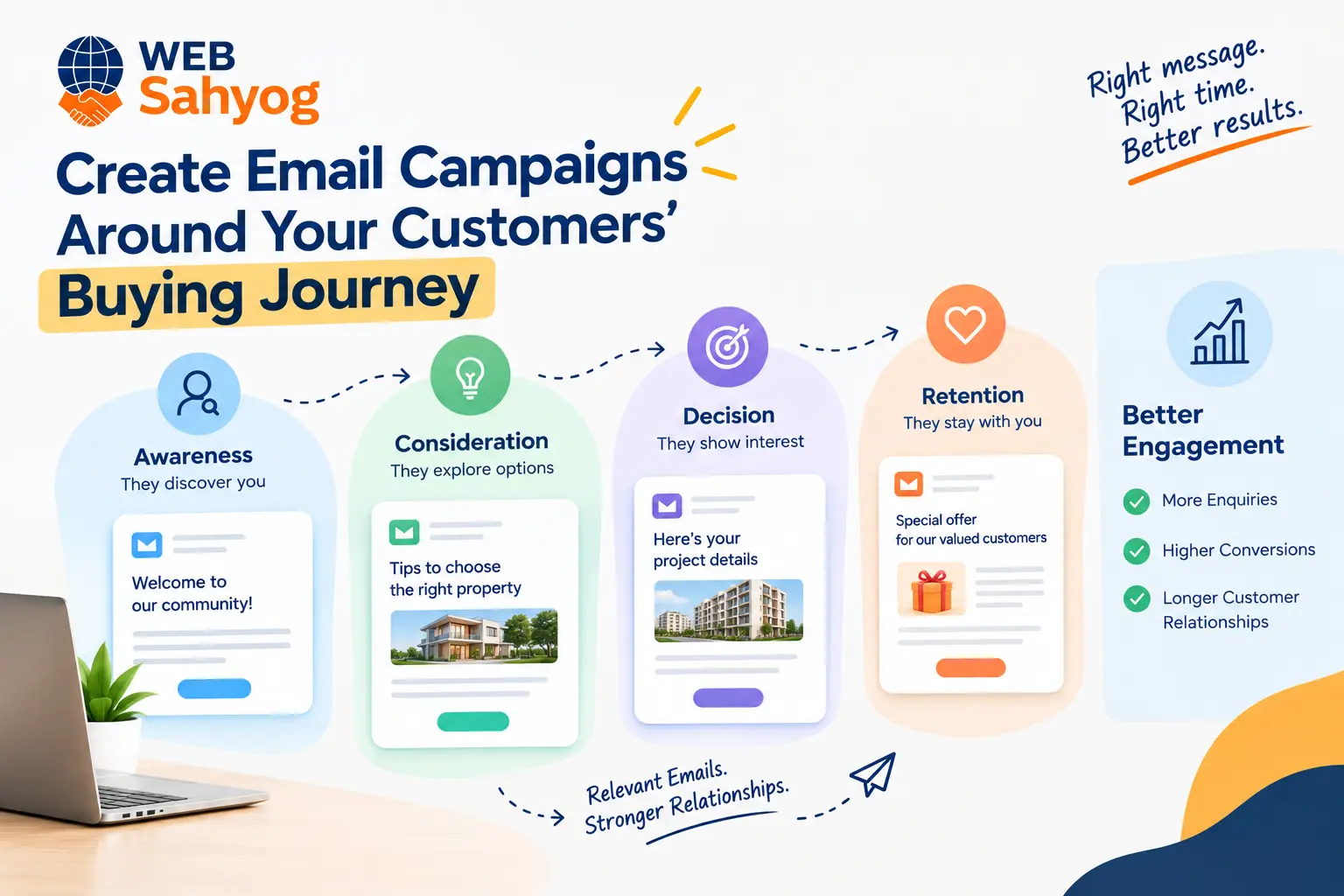
Create Email Campaigns Around Your Customers' Buying Journey
A successful email marketing strategy should reflect what customers need at different stages of their decision-making process. Someone who has just discovered your business may need an introduction, while an existing customer may be more interested in a relevant offer or service reminder. Sending the same message to both audiences can reduce engagement and make your campaigns less effective.
For example, a real estate business in Ranchi could send a welcome email to new subscribers, share useful information about choosing a property, and later provide relevant project details to people who have expressed interest. Similarly, a coaching institute could communicate course information to new enquiries and send admission reminders to students who are already considering enrollment.
This approach helps businesses make better use of their existing contacts. Instead of treating every subscriber as a potential buyer at the same stage, email marketing can support a more relevant conversation. Over time, reviewing which messages generate enquiries, replies, or purchases can help improve the campaign strategy and make future communication more useful.
Frequently Asked Questions
Email marketing services help businesses plan, create, send, and measure email campaigns. They may include audience segmentation, automated follow-ups, newsletter creation, and performance reporting. The exact scope depends on the agency and the business's goals.
It can help a small business follow up with enquiries, communicate with existing customers, and promote relevant products or services. The main benefit is a more consistent way to maintain customer relationships. Results depend on the audience, offer, content, and execution.
There is no single schedule that works for every business. The right frequency depends on how often customers need information and how much useful content the business can provide. A consistent, relevant schedule is generally more useful than sending messages only when there is a promotion.
Email marketing is commonly used for newsletters, educational content, detailed offers, and longer customer journeys. SMS marketing is often used for shorter, more immediate messages. The best choice depends on the customer's expectations, the purpose of the message, and the applicable consent requirements.
The cost depends on the number of contacts, campaign frequency, content requirements, automation, and reporting. Some businesses need only occasional newsletters, while others require ongoing lead-nurturing campaigns. An agency should provide a scope-based quotation rather than a price without explaining what is included.
Conclusion
Email Marketing Services In Ranchi can help businesses build stronger customer relationships, follow up with enquiries, and support repeat purchases. The most effective approach is not to send more emails, but to send useful messages to the right people at the right time.
If you are comparing email marketing services in Ranchi, look for an agency that can explain its process, measure meaningful business outcomes, and adapt campaigns to your customers. Web Sahyog can support that process by connecting email marketing with a broader lead generation strategy focused on relevant conversations and business growth.