
AI-Powered SEO Optimization Services in Bokaro: How To Turn Search Traffic Into Leads
A business owner in Bokaro checks their SEO ranking tool and sees it: position one, for the exact keyword they’ve been chasing for a year. Then they check their enquiries for the month, and the number hasn’t moved.
This isn’t a fluke, and it isn’t bad luck. It’s what search actually looks like in 2026, and it’s the reason “AI-powered SEO Optimization Services In BoKaro” has stopped being a buzzword and started being a genuine operational question for local businesses.
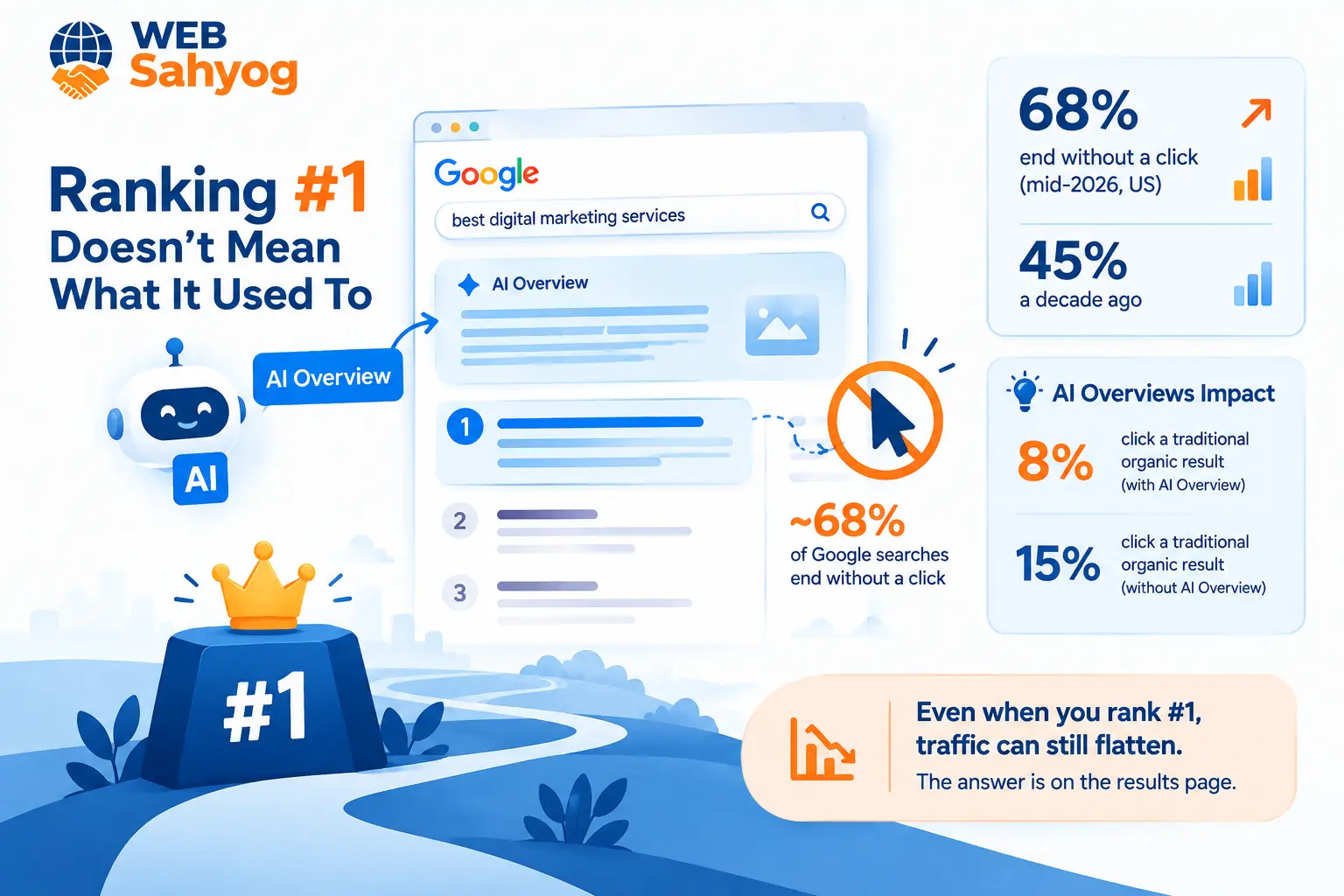
Ranking #1 Doesn't Mean What It Used To
As of mid-2026, roughly 68% of Google searches in the US end without anyone clicking through to a website at all, according to SparkToro’s tracking of Similarweb clickstream data. That’s up from 45% a decade ago, with the steepest rise in the last two years.
Google’s AI Overviews Slash Clicks are a major driver of that shift. When an AI Overview appears on a search result page, Pew Research Center’s behavioural tracking of real searches found people click a traditional organic result only about 8% of the time, compared with 15% when no AI Overview is shown.
Ranking first below an AI-generated answer increasingly means ranking first in a place almost nobody scrolls to. A business can do everything “right” by old standards and still watch traffic flatten, because the click that used to be earned by ranking well is now often answered directly on the results page instead.
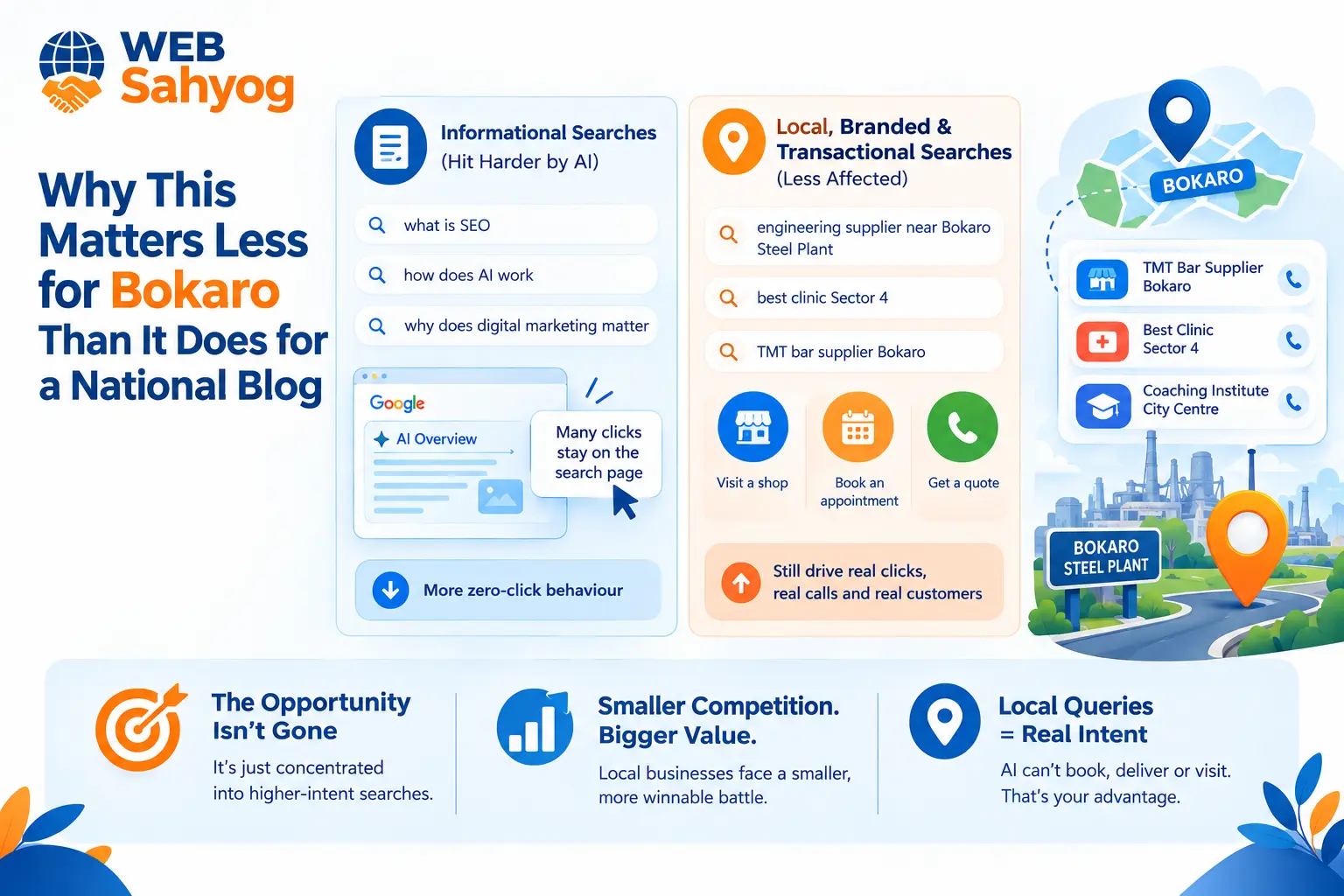
Why This Matters Less for Bokaro Than It Does for a National Blog
Here’s the part that gets missed in most doom-laden AI-search coverage: this shift hits informational content — “what is,” “how does,” “why does” — far harder than it hits local, branded, and transactional searches. Industry tracking cited alongside the same SparkToro research notes that branded, local, and high-intent transactional searches remain comparatively less affected by zero-click behaviour.
That’s largely because an AI summary can explain a concept, but it can’t book an appointment, deliver a quote, or visit a shop on someone’s behalf.
That’s genuinely good news for a business in Bokaro searching for “AI-powered SEO optimization services.” Someone typing “engineering supplier near Bokaro Steel Plant” or “best clinic Sector 4” isn’t looking for an explanation — they’re looking for a business to contact. That’s exactly the kind of query AI systems can’t fully resolve without sending the searcher somewhere real.
The opportunity isn’t gone. It’s just concentrated into a smaller number of higher-intent searches, which makes winning those specific searches more valuable than it used to be, not less.
This also changes what “competing” for search visibility actually looks like locally. A national publisher competing for a broad informational term is fighting for a shrinking pool of clicks against thousands of other sites. A Bokaro business competing for “TMT bar supplier Bokaro” or “best coaching institute City Centre” is fighting a much smaller, much more winnable battle.
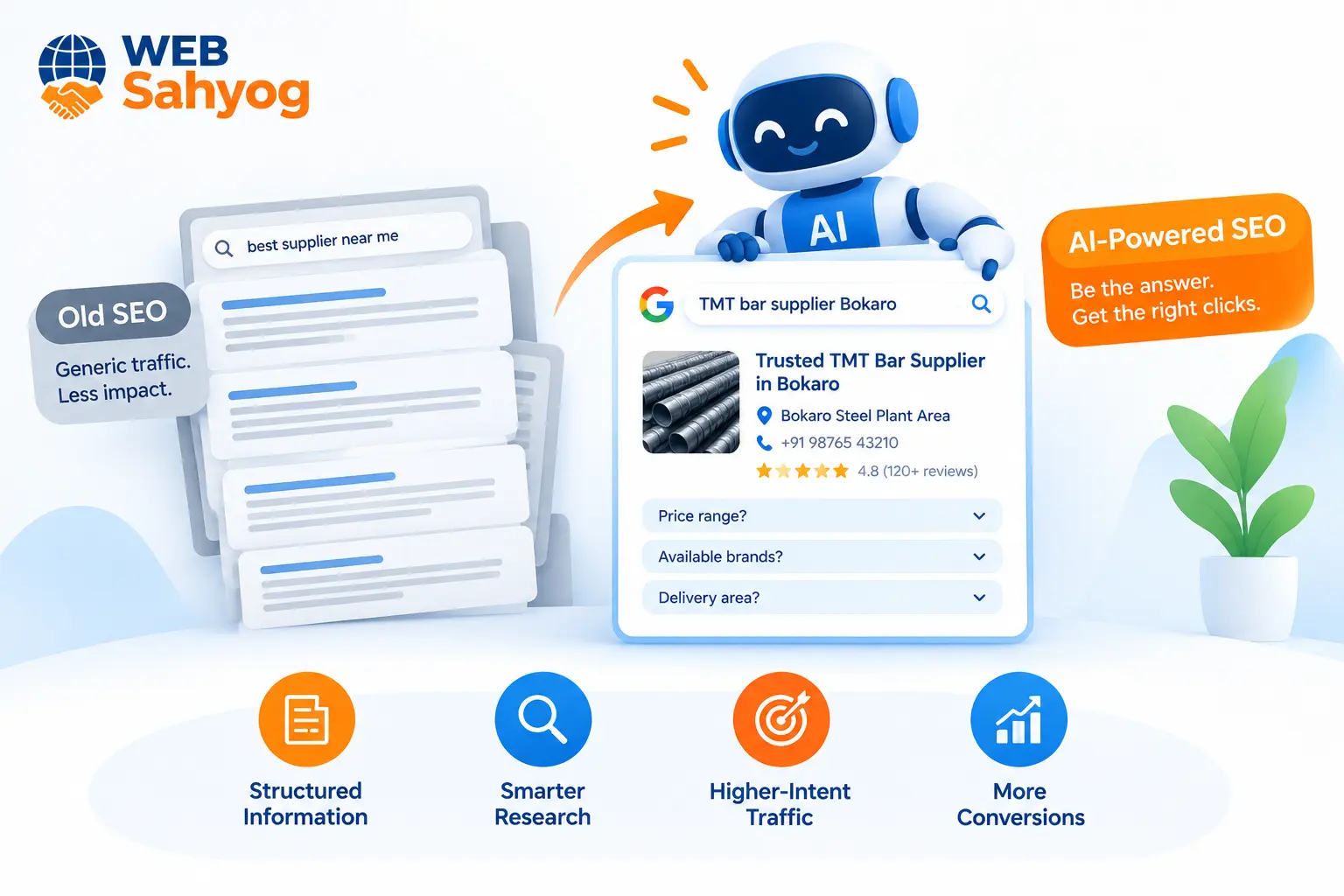
What "AI-Powered SEO Optimization Services in Bokaro" Actually Changes About the Work
AI-powered SEO isn’t about generating blog posts with a chatbot and hoping Google notices. It means two concrete things.
First, structuring a business’s information — service details, service areas, pricing ranges, credentials, FAQs — so AI systems can extract and cite it accurately. This relies on structured data (schema markup) and clear, specific page content rather than vague marketing language.
Second, it means using AI tools to do the research work faster: identifying which local queries are actually being asked, where a competitor is being cited and a business isn’t, and where existing content is too generic to be useful.
| Old SEO priority | AI-era priority |
|---|---|
| Rank #1 for broad keywords | Be the named, cited source for specific high-intent local searches |
| Generic blog content | Answer-first content with clear structure and schema markup |
| Chase total traffic volume | Chase conversion from a smaller number of high-intent visits |
| Optimize once, revisit occasionally | Keep content current, since AI systems re-evaluate sources continuously |
The shift isn’t from “doing SEO” to “doing something else.” It’s a shift in what counts as success — from visibility for its own sake to being the specific answer AI systems and searchers land on when the query is one that actually leads to a sale.
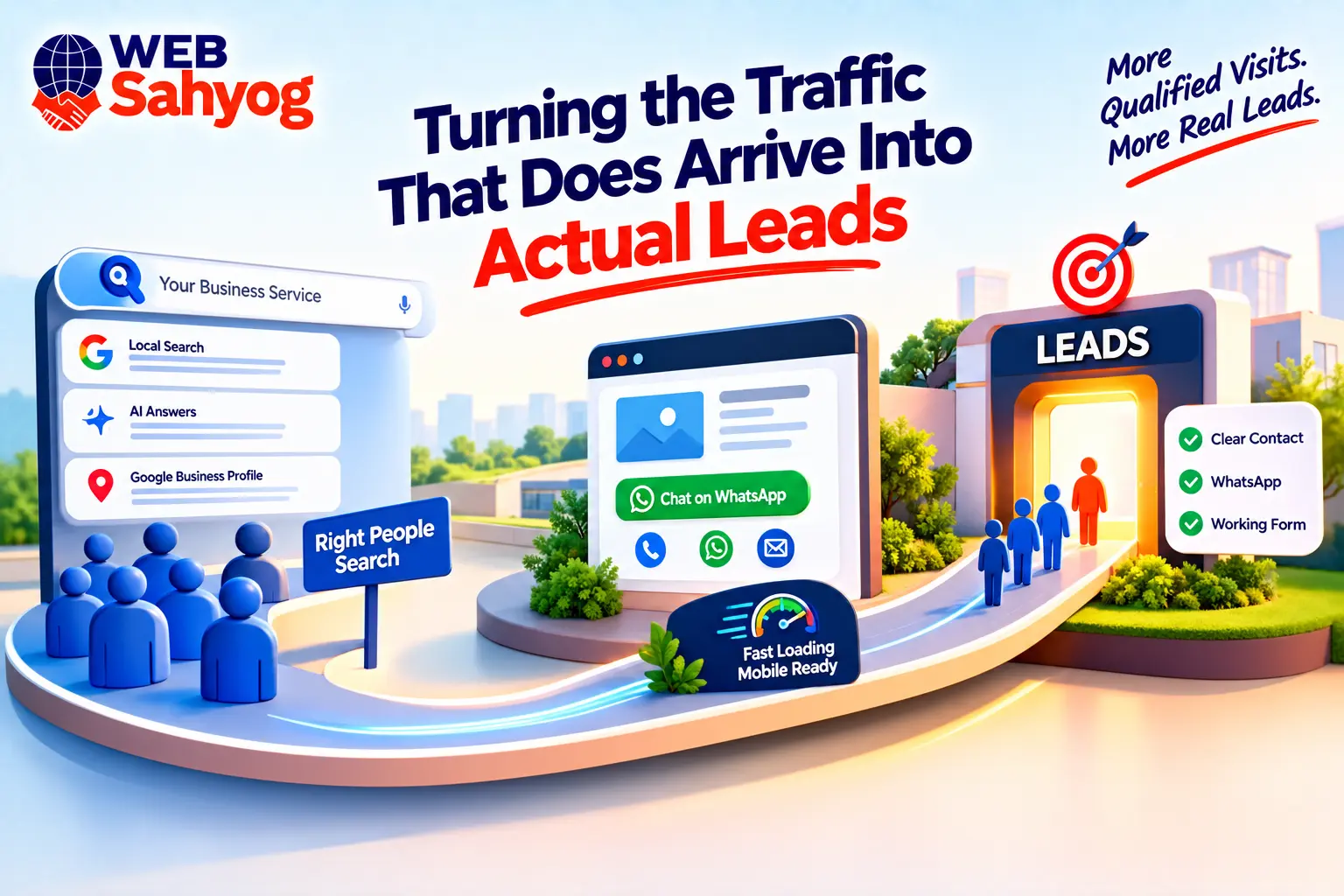
Turning the Traffic That Does Arrive Into Actual Leads
Because fewer searches result in a website visit at all, the visits that do happen carry more weight than they used to. What happens after the click matters more, not less.
A visitor who searched something specific enough to click through is usually close to a decision. A slow-loading page, a missing WhatsApp link, or a contact form that doesn’t clearly work can lose that enquiry just as easily as never ranking for the search in the first place.
Practically, this means the search-traffic side of the work — rankings, structured data, being cited in AI answers — needs to be paired with a page that’s fast and mobile-ready. It should give a high-intent visitor an obvious next step: a clear phone number, a WhatsApp button, or a short enquiry form, rather than a generic “contact us” page buried in a menu.
Businesses already working on GMB optimization services and a properly built WordPress Website development foundation are usually a step ahead here. Both directly affect whether AI systems trust a business’s information enough to cite it, and whether a visitor who clicks through actually converts.
The Trust Signals AI Systems Check Before Naming a Business
Getting cited in an AI-generated answer isn’t random. These systems cross-check several signals across a business’s online presence before deciding it’s reliable enough to recommend, and inconsistency in any one of them can quietly disqualify an otherwise strong business.
| Signal | Why it matters | Where it lives |
|---|---|---|
| Consistent name, address, phone (NAP) | Mismatches make AI systems less confident the listing is accurate | Website footer, Google Business Profile, directories |
| Recent, specific reviews | Signals the business is active and genuinely serving customers | Google Business Profile |
| Structured data (schema markup) | Gives AI a machine-readable way to confirm services and details | Website code |
| Complete service and FAQ content | Directly answers the questions AI systems are trying to resolve | Website service pages |
| Accurate hours and business category | Prevents AI from citing outdated or incorrect details | Google Business Profile |
None of these signals work in isolation. A business with great reviews but a mismatched address across directories, or accurate contact details but no structured data, still leaves an AI system with enough doubt to cite a more consistent competitor instead. Getting all five aligned is usually a bigger factor in being named than any single piece of content.
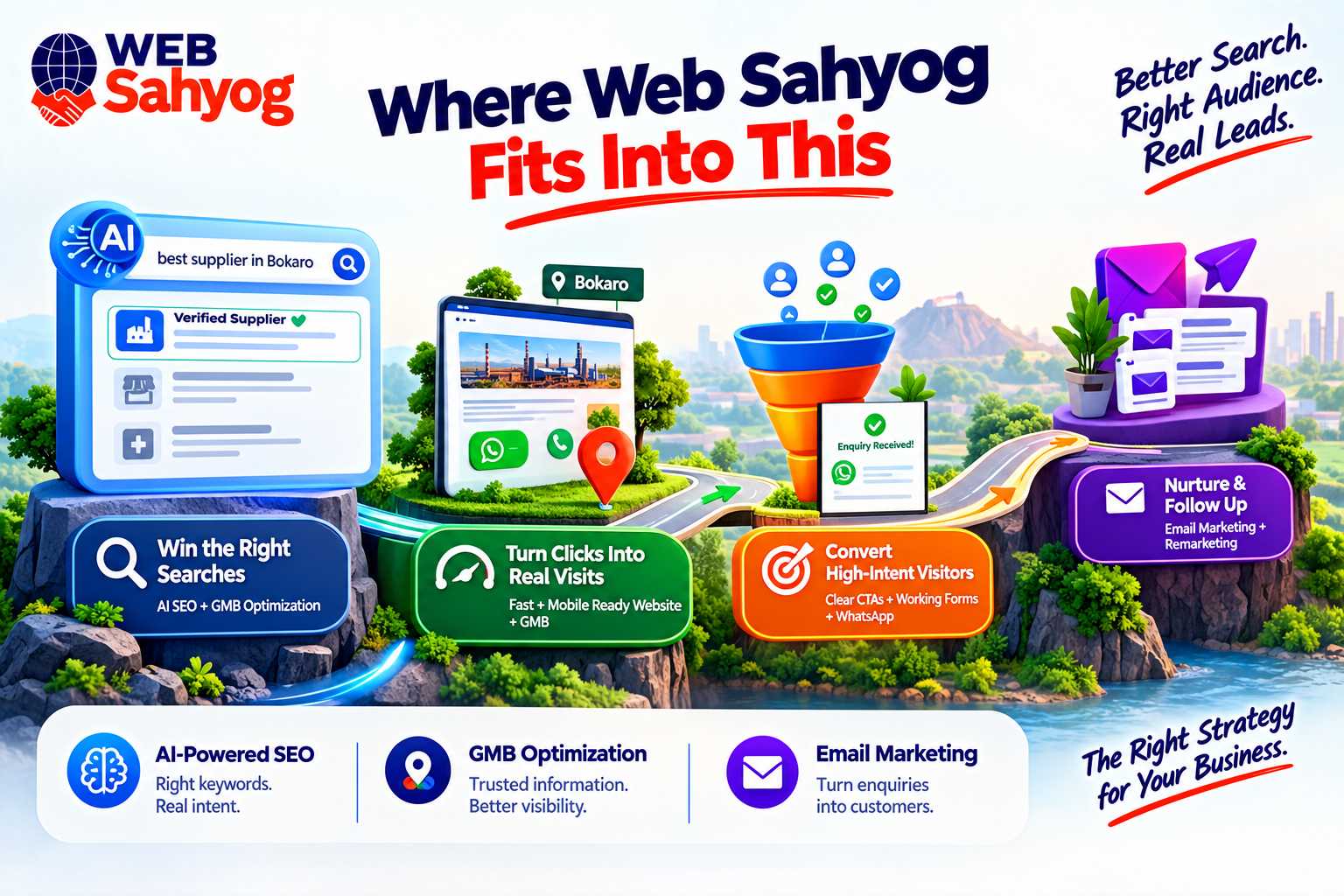
Where Web Sahyog Fits Into This
Web Sahyog’s approach to AI-powered SEO Services in Bokaro starts by identifying which specific, high-intent searches a business actually needs to win — not chasing broad keyword volume that’s increasingly being absorbed by AI answers anyway.
For an ancillary supplier, that might mean structured service pages that get cited when a procurement team’s AI search tool looks for a qualified vendor. For a clinic or coaching institute, it might mean ensuring the Google Business Profile and website agree on every detail an AI system might check before naming them in an answer.
Once that traffic is winnable, converting it usually comes down to follow-up — which is why the enquiries this work generates are worth feeding into Email Marketing Services rather than letting them go cold after the first message.
Once that traffic is winnable, converting it usually comes down to follow-up — which is why the enquiries this work generates are worth feeding into email marketing services rather than letting them go cold after the first message. This pairing matters more in an AI-search environment than it used to: since fewer searches result in a click at all, each enquiry that does arrive deserves a structured follow-up sequence rather than a one-time reply, so the smaller volume of visits doesn’t translate into a smaller number of actual customers.
Frequently Asked Questions
It's a real shift in priorities, not a different discipline. Structured data and being named in AI answers now carry more weight than before.
Unlikely for local and transactional searches. AI can summarize information but can't complete a booking or replace an in-person visit.
Meaningful movement in enquiries typically takes eight to twelve weeks, similar to traditional local SEO timelines.
Not a full redesign — adding schema markup and rewriting key pages to answer specific questions clearly usually makes the difference.
Yes. Local and transactional searches are far less affected by the zero-click trend than general informational queries.
Conclusion
Search traffic isn’t disappearing for Bokaro’s businesses the way it is for general content publishers — it’s concentrating into fewer, higher-intent searches that AI systems can’t fully answer on their own. The businesses that win from here are the ones structured to be the cited answer for those specific searches, with a fast, clear path for the visitor who does click through to actually become a lead.